
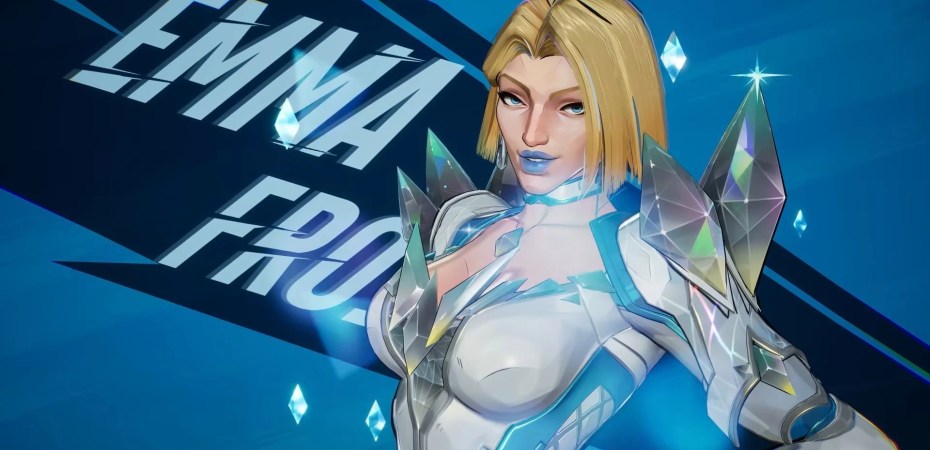
I’ll admit my relationship to Marvel Rivals was kind of hostile from the start. It was a disdain borne from my apathy towards Overwatch and the fact that they were using Magik, a character I’ve been fervently obsessed with since I was a teenager and for whom I feel an intense parasocial kinship. But putting aside my affinity for comic book continuity, the gameplay looks fun, the Eldritch Armor Magik skin is sick, and anything that made my friends ask me about Illyana Rasputin was a win. And by and large that still stands, but that depiction of Emma Frost… and the fact that this is going to become the public’s only perception of Emma Frost… well, I simply cannot stand idly by. This is a disservice, nay, an injustice to the most c*nt-serving character in all of comics and to everything that makes her who she is. This may or may not have been written while tipsy. But let’s get into it.
First: the design. That outfit. That f*ckass bob. She. Would. Never. And for two reasons: firstly, that it is simply not a serve, and secondly, because it misunderstands everything that is sexy about Emma Frost. An ugly leotard with bright blue accents and coattails? Not even remotely serving White Queen. Where’s the couture? The fur, the shoulder pads, the cape, the thigh-high boots, where’s the FASHION? All they do to make her sexy is give her giant Pixar-mom thighs and extra boob jiggle physics, and that’s just not Emma Frost. Her sex appeal has always been blatantly over-the-top, but in a way that reflects careful construction and deliberate presentation. When she first appeared with her corset, panties and fur cape, she presented unadulterated dominatrix. When she wore the completely illogical negative-space X-cutout outfit in New X-Men, it presented a version of sexy so over-the-top it can’t be read as anything other than intentionally self-aware.
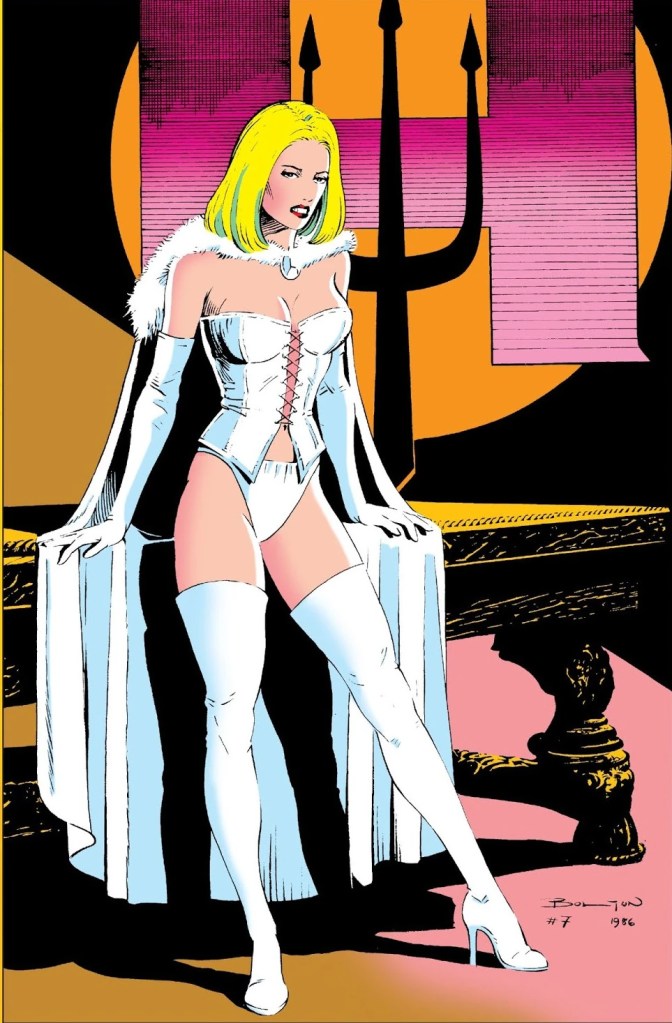
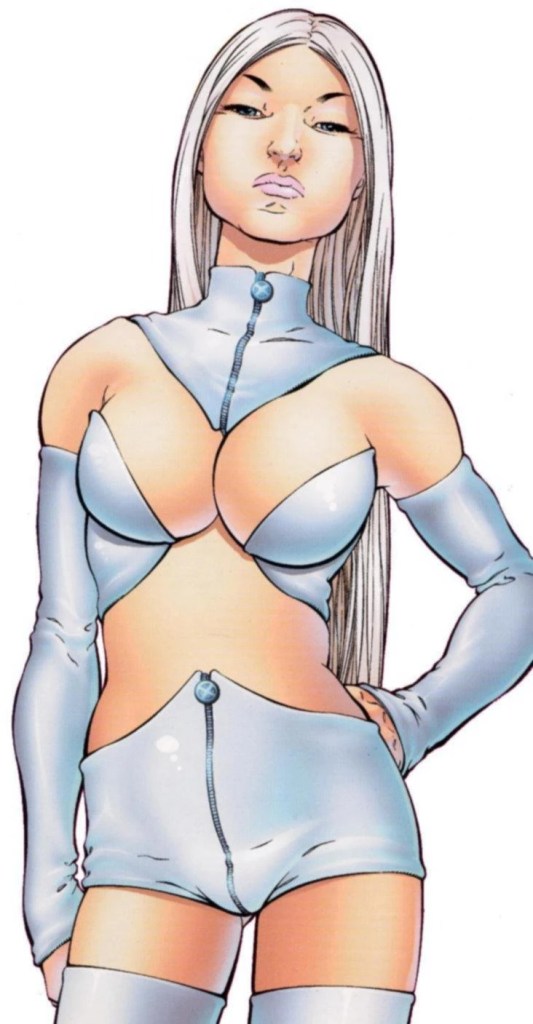
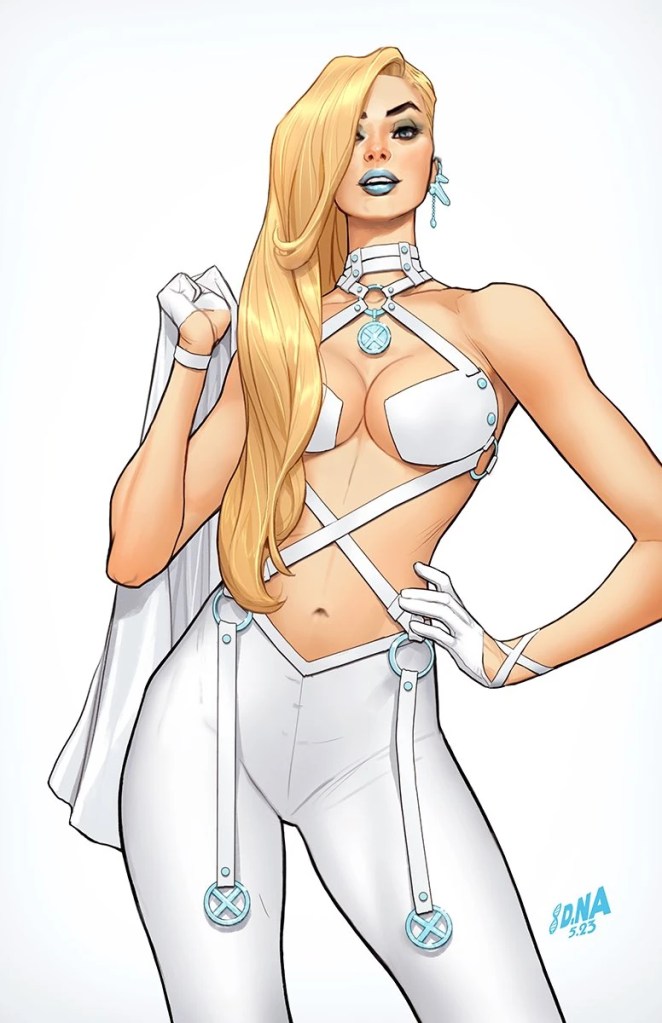
In Marvel Rivals, her body is simply presented as naturally sexy, and it’s her affect that tells you she is being seductive on purpose. But to truly capture Emma Frost, her outfit—replete with luxury fashion and open sexuality—should tell you from a mile away that she is being seductive on purpose. And it’s the way that Rivals leaves out the “on purpose” that makes their version of Emma feel like a cheap knockoff rather than the real thing, because the cornerstone of who Emma Frost is is that she is deliberately self-made. Also, come on, her being a tank gameplay-wise was the perfect opportunity for some lavish coats and capes to communicate her status.


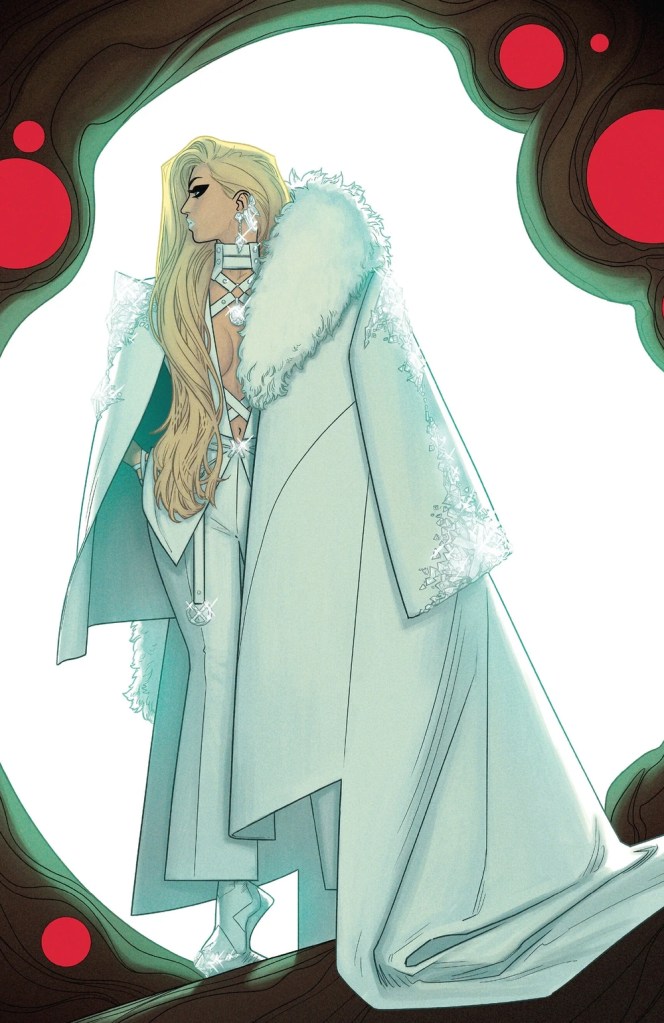
Emma Frost is character who revolves around power, and as a woman—as someone who was a teenage girl with telepathy, subjected to everything any man ever thought about her—she felt that her only avenue to power was through sex, and she took it. She became a dominatrix, she joined the Hellfire Club and became the White Queen, and using her body she worked her way into the upper echelons where those despicable men operated so she could squeeze out some of that power and use it for herself. And none of that came naturally to her. She was born a socialite, yes, but from a dysfunctional and abusive family from which she was ultimately cast out. She was always pretty, but as plain, mousey-brown brunette. So she worked for it. She rebuilt herself with plastic surgery, trained herself to excel in seduction, became a master of telepathic power. She even puts on a fake accent—she’s from Massachusetts, not England. And it’s this cold, calculated intentionality that makes her such a compelling character. Amidst the cultural expectation for women to be “naturally sexy”, Emma Frost proudly recounting just how much her nose cost is what makes it feel like the power is in her hands as a character with depth making her own choices, rather than just a drawing made because the artist wanted to see boobs. She is one of the few examples of a character for whom “using her feminine wiles” can actually work as a tactic, because we see her put it on and use it, and we see exactly how constructed a tool it is. Her presentation in Marvel Rivals doesn’t convey any of that—no riding crop, no corset, no crazy sexy high fashion, just thighs and flirty voicelines. Without the intentionality, you lose the power that makes the character work. And this is where Rivals extra fails, because their characterization of her and their account of her backstory doesn’t account for who she is and what she wanted this power for.
I think the most succinct way to highlight Rivals’ failures is to compare their overly-rosy, alternate-universe view of Krakoa, the mutant island nation, with how Emma was talked in to joining in the canonical version in the comics. In Rivals, Emma’s introduction mainly focuses on the Hellfire Gala, a short-lived but admittedly pretty fun annual comics event where all the X-Men got dressed up in fancy costumes. They’re rather to the point about it: she joined up with Professor Xavier to realize his dream of mutant equality, and now she throws fancy parties (because she’s a sexy socialite). In the actual comics that established Krakoa, House of X and Powers of X, Emma had to be approached by Xavier and Magneto and let in on the real plan. Not the veneer of Krakoa that they’re presenting to the world, but the truth of it, the shadowy machinations of the immortal Moira Mactaggert and the necessity of acting now to win a mutant space war 10,000 years from now. This is key piece number one: they have to approach Emma, as her own faction, as one of the world’s most powerful telepaths and a power-savvy manipulator in her own right, and they need to cut her in to the deals that are really being made behind the scenes. The second key piece is her response: she says, “One more time, then. For the children.” This line is drenched in history in the way only long-running serialized comics can be, but this history is the core to who Emma has been for the past 40 years: why she does what she does. The context here is that this is not the first time, or even the second time the X-Men have tried to build an island nation to be their mutant utopia. The first two islands were both bombed to hell. The first one was bombed to hell while Emma was on it, teaching a class when all of her students were blasted to ash. Because since the beginning, since she was trying to kidnap Kitty Pryde while wearing panties and a fur cape, Emma has been both dominatrix and school headmistress. At her heart, her goal is to teach and empower mutant children to become powerful and resilient in their own right, to survive marginalization in a world that wants them dead. To teach them to survive the way she was forced to learn to. From the original Hellions, to Generation X, to her class on the island of Genosha, to the Hellions in Academy X, over and over again her goal with the power she accumulated has been to teach, and over and over again she couldn’t stop her students from being killed. And so she carries on, the White Queen forging herself into something desirable, powerful, and unflinching, to gain the power to try to forge the next generation to be able to withstand what she withstood. Conveyed beautifully and succinctly by her famous line from her short story in Dark Reign: The Cabal, “How did I survive apocalyptic fire? I simply refused to feel the flames.” Now, this depth was built up over many years of stories, and doesn’t inform every version of Emma in every comic, but in my estimation it is the basis of what makes her such a compelling character to so many ardent fans. And it’s also what Marvel Rivals has so far completely failed to capture.


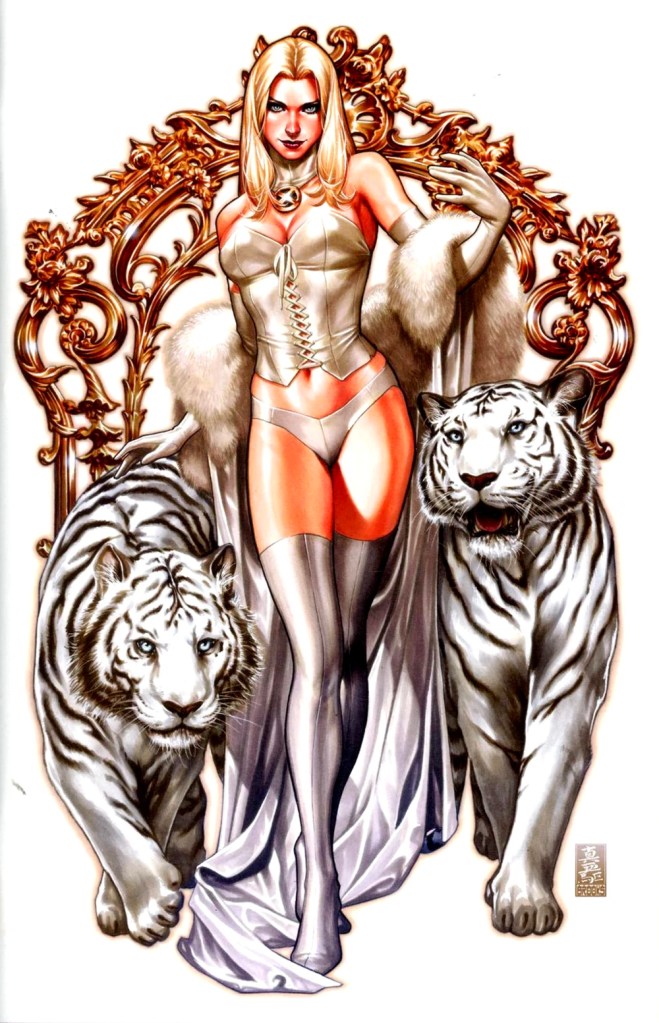
Maybe in the future they’ll roll out a “retro” skin that actually ties into her backstory, or actually communicates her character through its design. But right now, the version of Emma Frost being popularized on Marvel Rivals and the “snow bunny mind control” memes its spawning, is an absolute disservice to the actual White Queen.

 The Vault Publication