

By Maddie
Doesn’t it sometimes feel like relationships in video games are shallow? That’s not to say the characters involved in these relationships aren’t well-written, or that all video games are like this (look at Baldur’s Gate 3), just that sometimes it can feel almost robotic when you try to build relationships with characters. You learn what they like, or look up a guide with all the “correct choices”, and you know exactly what to do. It can be nice, comforting in a way real conversations aren’t. You know there’s a right answer, and if you’re really worried, you can look that answer up. But, at times, it gets stale — because more-or-less, the end result is you just sucking up to a character to win their favor.
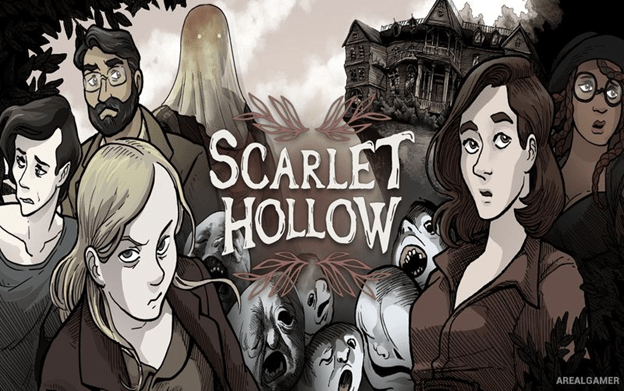
Still, some game developers have given it their all to begin building complex relationship systems — and Black Tabby Games certainly falls into this category when you look at Scarlet Hollow. Scarlet Hollow is an interactive horror visual novel, with some dating sim elements to it. As mentioned before, it was developed by Black Tabby Games — founded by husband-and-wife duo Abby Howard and Tony Howard-Arias — who you may recognize as creators of another rather popular horror visual novel, Slay the Princess. Scarlet Hollow is still currently in early access, with 4 of 7 episodes released, but the game manages to be both story-rich and engaging, with a beautifully drawn artstyle and well-made story that keeps you on the edge of your seat.

Still, it’s undeniable a large part of what makes Scarlet Hollow so successful is the well-written cast of characters making up the town of Scarlet Hollow you interact with. Every character feels like they have a unique personality and worldview — even characters who aren’t romanceable. The best example of this would have to be your cousin, Tabitha, a woman who most certainly doesn’t want to get to know you at the start of the game, only tolerating your presence because you’re visiting for the funeral of your estranged aunt — Tabitha’s mother. Tabitha is best described as gruff, easily annoyed, and desperate for you to not disturb the life she’s built for herself. On the surface, this makes navigating your relationship with Tabitha seem easy enough.
If you want a bad relationship with her, don’t follow the rules. Eat her off-limits ice cream, sneak into the family mine she owns, and behave rudely whenever you’re with her. If you want a good relationship, just respect her. Leave her ice cream alone, don’t sneak off, compliment her work ethic, and spend as much time with her as possible. Watch as that annoyance and disregard for you turns into something gentler, fueled by worry more than genuine annoyance, and watch that shape the story.
In later episodes, you’ll have the option to call Tabitha for help with a ghost hunt, and during a high-stakes situation (no spoilers), you can try calling her as backup. If you’re on good enough terms with Tabitha, she’ll show up to the ghost hunt despite her reservations. She’ll also show up to the high-stakes situation with some firepower, although whether that actually helps the situation is up for debate. Tabitha can even be convinced to make a significant sacrifice to save you from making the same one during one episode if you’ve built up enough of a rapport. Simple enough, right?
That’s where you’d be wrong, because there is something wonderfully complex about the relationship system that Scarlet Hollow utilizes.
A post made by Tony Howard-Arias goes into more detail about the relationship used for Scarlet Hollow. I’ll link it at the end of the article so you can read it yourself — something I highly encourage, even though I will be summarizing the post here. Initially, the plan was to use a simpler system, with basic options characters either approve of or disapprove of. This system proved too binary, however, resulting it in being abandoned for a system that not only affected a character’s overall opinion of you, but also how they’d perceive your actions going forward. In other words, a character’s opinion of you based on past interactions and observations would change what they felt your motivations were — and cause those characters to react accordingly.
Do you generally agree with characters, regardless of the choices they make? Are you open about your own vulnerabilities? Are you generally reliable when the character makes a request? How cunning do you come off as to other characters? Factors like these can make what is normally perceived as a genuine compliment come off as empty flattery instead — all depending on your choices.
These decisions drastically impact your ability to bond with characters. This means you may be unable to unlock bonus scenes with them or convince them to make important decisions later in the game. If a character sees you as unreliable or untrustworthy, after all, they’d have no reason to listen to you or your requests. Or, maybe, you’re viewed as somebody who’s just agreeable with ever being emotionally vulnerable — something that translates into a superficial niceness some people can’t trust. Traits like these may drive away certain characters while leading others to trust you — something much more complex than many other video game relationship systems.
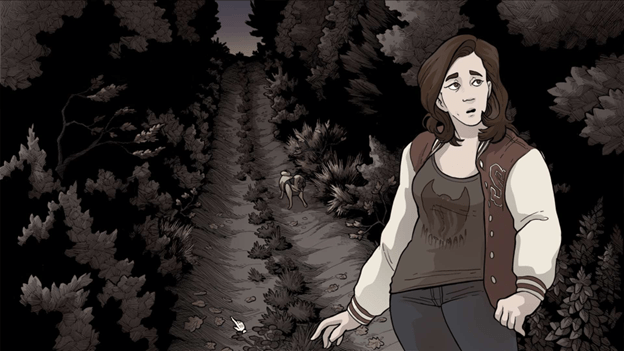
It’s even possible for characters to notice you acting “OOC” (out of context), so to speak. For example, in Howard-Arias’ post, an example from Episode 1 was given: If when you’re initially investigating with Stella, a passionate paranormal investigator (and romanceable character), you act boldly and confidently, but begin acting scared at signs of potential danger, she’ll take the time to check in with you due to your personality shift.
Actions such as this make choices and relationship developments feel a lot more meaningful. It’s not a matter of “right” and “wrong” choices, it’s now a matter of how you act and when. Different traits appeal to different characters, and so do different choices. Characters call back to specific choices, conversations, or events that your “personality” led to — for better or worse. It’s even possible to be on good terms with somebody in Scarlet Hollow and not have achieved any meaningful trust with them — something that might make a character friendly, but stop them from actually contributing meaningfully to your efforts. It makes all the characters feel much more real and fleshed out.
Of course, while Scarlet Hollow’s relationship system is part of what makes it so special, there’s a lot more to it than just out. The art style is fantastic and downright eerie at times, and the wonderful storytelling constantly makes you question what exactly is happening in this town. While it’s not out of early access yet, I’d still recommend Scarlet Hollow to anybody interested in it based on this article, or anybody who really enjoyed Slay the Princess. If you buy it now, you get any episodes released in the future for free, and the episodes currently released are wonderful, weaving an alluring, dark story through smaller, interconnected events.
Scarlet Hollow as a town is just so full of life, adventure, romance, and, of course, terror. Seriously, don’t just take my word on this — check it out yourself, and go create your own story. I recommend going in as blind as possible, because it’s absolutely worth it, trust me.
|
Tony Howard-Arias’ Post: Creating a dynamic relationship system in Scarlet Hollow | by Tony Howard-Arias | Medium

 The Vault Publication