
by Maddie

Think of the poets you know – and try naming them off the top of your head. Admittedly, my own pool of names is small, but there is one I’d hazard a guess all of us know: Edgar Allan Poe. A famous American writer and poet, Poe’s devote fans may know him as one of the earliest writers of the detective story genre and science fiction, but most people know him for his works in horror. Whether you recall The Raven, a haunting piece centered on grief, or The Masque of the Red Death, reminding all that death will not spare you no matter how rich or powerful you may be, the central themes of a lot of Poe’s work were grief and obsession. The lengths to which it could drive a person, within the narrative of Poe’s works, was fantastical – and downright horrifying at times.
It’s no easy feat to capture even an iota of this energy – which is why Mike Flanagan’s The Fall of the House of Usher is such an impressive love letter to Poe’s works. Note that when I say works, I do mean the majority of Poe’s works, as each episode in this horror spectacular is named and themed after a different story. Each work is intertwined seamlessly, so that as one story reaches its end, another continues to be in motion in the background – either enthralling viewers as they try to guess what happens, or preparing those familiar with Poe’s works for the horror that lies ahead.
I should note I am a massive fan of The Fall of the House of Usher, but I’ll be the first to admit it’s not for everybody. There’s a lot of material that may leave viewers uncomfortable, with the topics of suicide, domestic abuse, body horror, and animal abuse being the most prevalent. If you have any interest in watching, I’d recommend looking up a comprehensive list of potential triggers, because Flanagan doesn’t shy away from going to extremes. It’s nothing out of the usual for him, but it still is understandable for this to be outside your comfort zone.

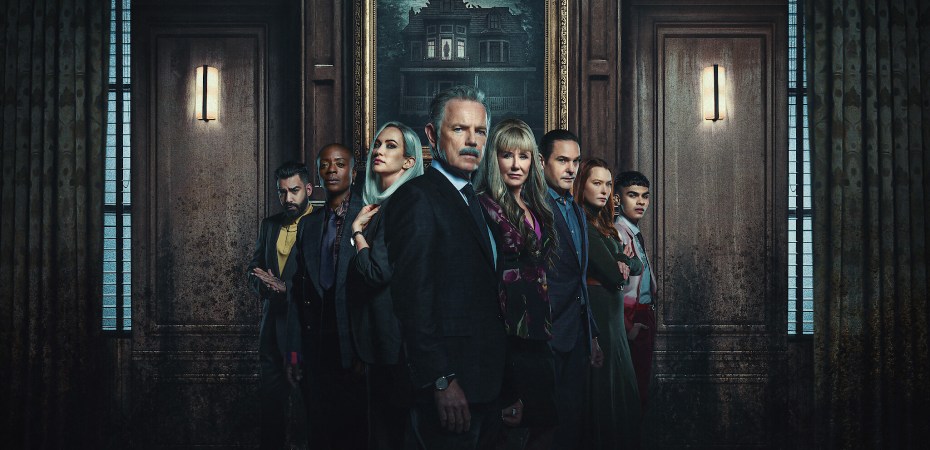
As for myself? I’m a massive fan of Poe and Flanagan’s previous horror shows, so I found myself captivated. Obviously, the plot is fascinating; The Usher family, who built their fortune on selling highly addictive opioids, mysteriously suffers loss after loss, with all the Usher kids having died under odd circumstances by the time the series starts. Auguste Dupin, who has pursued the family his entire life, is invited to gain Rodrick Usher’s confession and learn the truth of the whole affair. The overarching story primarily centers around Rodrick Usher and his sister, Madeline Usher, and the deals they made to achieve such rotten, corrupt success, but the episode-by-episode story usually centers around one of the kids and the events that led to their demise. Each episode is named after one of Poe’s works, and every character’s name is influenced by or directly lifted from a story or an element of Poe’s life. You even have the classic Lenore, Rodrick’s granddaughter, and the last Usher besides Rodrick and Madeline shown to be alive at the beginning of the show.
Obviously, such a plot is going to lure viewers in – but what will keep them is the characterization of every Usher and their actor’s performance. Everybody truly understands what fundamentally builds their character, whether it be the pathetic, despicable Frederick or the blunt, angry Camille. In particular, I’d like to point out Carla Gugino’s performance as the enigmatic Verna, who haunts the narrative with a burning passion. Whenever she appeared, I couldn’t look away, and found myself both intrigued and terrified by her at the same time, practically rooting for her while not fully understanding her role in everything. She conducts herself confidently and with an air of casualness, but every move and action are so clearly planned that you know for a fact that our lovely Verna is farther ahead of the game than anybody else. It was an absolute standout performance among an already incredibly strong cast.

Tell me you wouldn’t be captivated by her too. Just try it.
Despite my praises of both the plot and the cast, however, my true love of this series lies in one element: its themes. The story of The Fall of the House of Usher examines many topics – animal testing, hedonism, and love vs. wealth, just to name a few – but the core thing that ties them together is this: those with wealth don’t care how their actions affect others so much as themselves and are more than happy to leave that burden to future generations. All that’s left behind, at the end of the day, is a legacy of pain and destruction when it’s too late for them to often get their just desserts. Not that they care, because even when alive what matters most to those with privilege is dodging consequences while everybody around them suffers – something that may ring a little too true.
Indeed, while The Fall of the House of Usher shines in creating an atmosphere full of dread shrouded in a supernatural layer, I’d argue its strongest horror comes from the fact it’s so easy to apply everything it shows to the real world. The Usher family is even responsible for selling addictive opioids using misleading marketing – something directly taken from the real-life opioid crisis! As we witness the house of Usher crumble, are we treated to grief? Some, yes, but almost every member of the family is more concerned about what a death means for them than they are concerned with the fact they lost a sibling. In a particularly chilling scene, when one of her employees apologizes for her loss, all Camille can do is stare, at first genuinely confused about what the apology could be for until it’s clarified.
The Usher family is so detached from consequences due to their wealth that they come off as inhuman. They’re ruled by a desire to keep the power they have and pursue their lifestyles – no matter what it takes. It’s easy for them to devolve to cruelty – and you witness it time and time again. They are given every opportunity to grow, to change even slightly, and they snub it every chance they get. I’ve heard some people complain it’s obvious that the Ushers are being given warnings and that their actions will backfire on them – and that’s the point. Why would people who have never faced consequences in their life, who can throw as much money and resources at a problem as they desire, ever need to self-reflect or learn to spot obvious red flags?
And what’s worse? I’d argue, even without a supernatural plot in motion, two of the Ushers would have merely died from their own decisions. They’re so far removed from natural consequences, from the world not bending to their every whim, that they assume everything is destined to work out for them – because why wouldn’t it? It’s depressing when you consider the real world, and how that statement manages to hold true for so many people. It’s easy to feel like money does make the world go round.
Flanagan, despite not hesitating to portray the Ushers as the monsters they are, does a good job of humanizing them and rewarding them with complex characterization too. Even though we may not sympathize with them, we can see exactly why they ended up this way. We see an environment where Rodrick purposefully sets his kids to compete against each other, doing nothing to stop them from tearing into one another for the smallest of rewards. We see siblings squabble and fight, using the angriest remarks and most bitter words to establish their points, some genuinely loathing each other. We watch them breakdown, and in some questions genuinely grieve for their siblings and what was lost or question if they should do things differently – right before they’re sucked back into the toxic dynamics of the Usher family, where everything is dog-eat-dog. We’re given these small hints of who they could be, if these were not the circumstances they were born into, and it makes the horror of knowing they will refuse to change and continue their path of corruption that much worse – because in our world, the same thing happens too, and we all know it, as awful as it is to think about.

All in all, I cannot recommend The Fall of the House of Usher enough. While it’s a controversial opinion, and I’m a biased party, I’d dare to call it Mike Flanagan’s finest work yet. If you haven’t seen the show yet and felt compelled by any of this article, and you don’t think any of the content covered will be triggering, I implore you to take a watch. It’s truly an experience – one that’ll weigh on your mind long after you’ve finished watching.

 The Vault Publication