
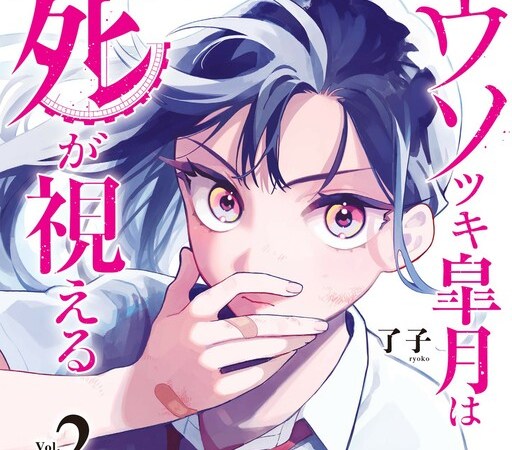
Usotsuki Satsuki wa Shi ga Mieru (Liar Satsuki Can See Death), a criminally underrated manga by the artist Ryouko, weaves a completely unique take on the murder mystery. Its genre-bending premise puts the focus on preventing murders, raising questions about when death is justified, and expressing our deep-seated fears about the unpredictability of death. Moderate spoilers ahead.
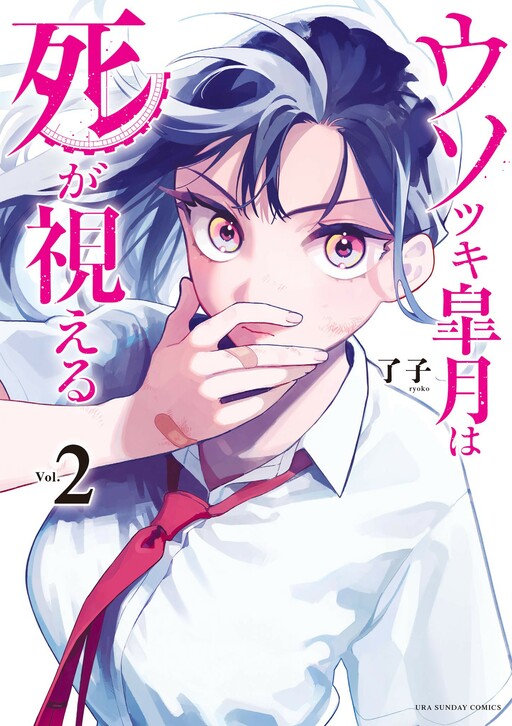
The manga centers around high schooler Satsuki Minazuki, regarded by all her classmates as a compulsive liar; she has a constant habit of telling people that they are about to die in gruesome, implausible ways that never actually happen. Satsuki, however, has never told a lie in her life. What she’s actually doing is seeing the “premonitory corpses” of people 24 hours before they die, reverse-engineering the cause of death, and then doing everything she can to prevent it (including warning the victims, who never believe her). Usotsuki Satsuki creates a sort of inverted murder mystery, where the crime has to be solved in order to prevent it from happening. The fact that Satsuki has to do this while everyone around her dismisses her as a lunatic just makes her desperate quests to save those very people from wandering into their deaths all the more poignant. And most of their deaths are in fact wandered into: rather than murders, Usotsuki Satsuki highlights the absolute randomness of fatal accidents.
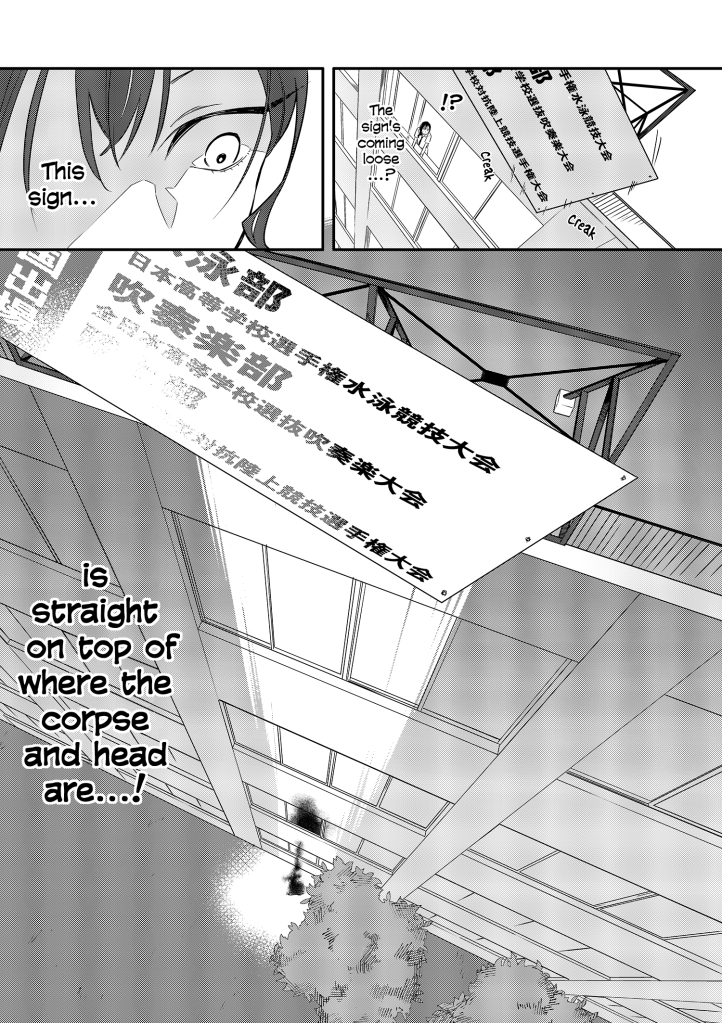
This is best summed up in the first case we see Satsuki solve. She sees the premonition of her classmate Komachi’s severed head on the school’s lawn, launching a mad dash investigation to try to figure out what will end up causing the beheading. The answer? A sign mounted on the roof happens to come loose right as Komachi sticks her head out the window. With literally no time to spare, Satsuki throws herself out of the upper floor window to physically push the sign out of the way.

This is the basis of Usotsuki Satsuki: a girl who nobody believes persistently saving lives by altering the course of fatal accidents, usually at the last second via brute forcing the problem. The story juxtaposes the idea of “crying wolf” with the fact that death could actually be lurking just around the corner. It puts human mortality at the forefront, and doesn’t let you look away from the fact that something as benign and accidental as a screw coming loose can cut our lives short in one fell swoop. The manga balances out this grim reality with humour, since the fact that death is inevitable is just that, a fact that we all live around, but the spectre of random death haunts and interrupts the story. Satsuki is always on alert, hyper-aware of all of the world’s possible dangers, to the frequent exasperation of those around her. It’s actually a really relatable depiction of what an anxiety disorder can be like. I’m personally pretty familiar with how hard it is being paralyzed with anxiety over something that other people easily dismiss as unlikely, but that terrifies you because it’s unlikely but possible. Satsuki embodies that fear, and the feeling of crying wolf that comes with it, and it’s probably partly because of that that I find this manga and its themes so impactful.
But Usotsuki Satsuki doesn’t just ask what it means to be fully aware of human mortality, it also asks what makes someone worth saving. Satsuki is driven by her conviction that all life is sacred, and even if it costs her everything, no one will ever die on her watch. But the story complicates this, again and again, interrogating which motives, which circumstances would make murder acceptable. Is there ever a situation where death is an acceptable punishment? Satsuki has to wrestle with this directly; first with her friend Atou, who is planning to kill her own father in order to stop his constant abuse; then with another classmate who plans to kill herself to escape her mother. It’s heavy, and it’s dark, and it shakes Satsuki’s convictions, but ultimately, she stays true to herself and to the idea that even if warranted, capital punishment cannot be the answer. But her refusal to be judge of others’ right to live is what brings Satsuki into the crosshairs of the manga’s antagonist: another student who can see premonitory corpses, who uses this power to arrange accidents that will eliminate people’s abusers.
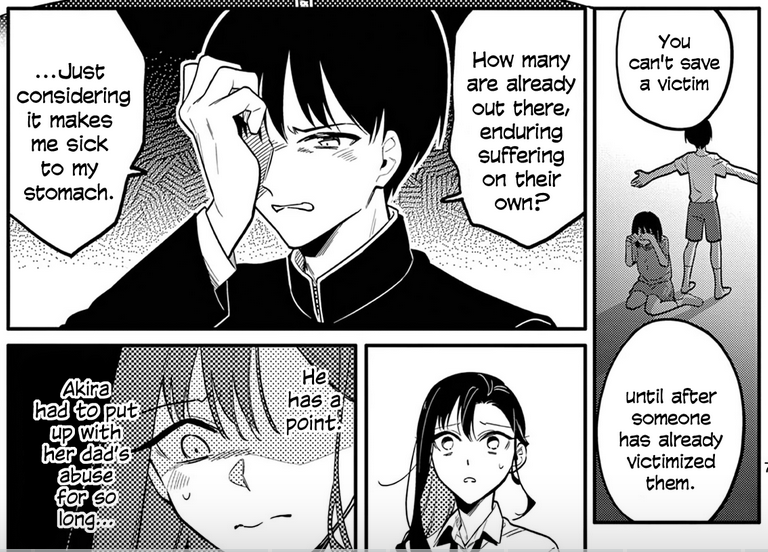
The story complicates this moral stance, too. Who, exactly, is bad enough to warrant dying for their crimes? Does killing people for their crimes make you a criminal too? What about people’s right to a chance to grow and change and atone? And unlike Death Note, these aren’t punishments doled out for convicts from afar, this is a high schooler orchestrating the deaths of people around him; should someone die for something they do when they’re 16?
Satsuki sticks to her convictions that the right to live supersedes all others, but it’s these relentless complexities that make Usotsuki Satsuki such a good story. It challenges us with our sense of mortality, with our own definitions of justice. It’s a murder mystery that doesn’t ask us to catch a perpetrator after the fact, but to weigh their life in the balance. Plus, the actual detective work of figuring out the corpse’s cause of death is incredibly medically detailed, the characters are sharp and compelling, and there’s even yuri-bait. The manga is currently ongoing, and it’s well-worth a read.

 The Vault Publication