
When it comes to the dark and disturbing, we often rely on fiction – whether it be books or video games – to explore the macabre safely. The topics being covered still need to be executed well, of course; you can probably make a decently long list about games or shows that were poorly done for shock value and received backlash as a result. When done right though? Video games in particular can be a way to fully explore the forbidden and dangerous, sometimes even working as a source of comfort people can identify with.
Still, you can’t just put content related to brutal deaths and similar topics into a game and expect people to be content with that. People who have lived through traumatic events (or are just uncomfortable with certain scenarios) may react poorly to encountering material that is discomforting or serves as a reminder of horrible events, and games are no exception. That’s why content warnings, or trigger warnings as they’re sometimes called, were invented to solve this problem. Content warnings are meant to give gamers a signal of what they might encounter as they play, allowing them to avoid any material that could cause discomfort or distress (Bower, 2023). In theory, this should work perfectly to let people know what of any disturbing subject matter, and if the themes of the story being told are going to be for them.
There is one issue though: finding a balance between giving appropriate warnings and how often warned-against content appears in games. This article, to put it bluntly, is not arguing against the inclusion of content warnings. Content warnings allow people to know what to expect in games, after all. However, if potentially disturbing content only appears in certain routes or is hidden behind optional paths that can be skipped, does simply labeling the whole game as containing that content do the job? I’d argue not – and that’s why the content warning system used by 2022 role-playing game I Was a Teenage Exocolonist is ingenious.
I was a Teenage Exocolonist – as described above – is an RPG with cardbattling mechanics. It’s primarily story-based, with the outcomes of various in-game events decided by your choices in your colony. The story is set in the first extrasolar space colony, as Earth is no longer truly habitable, where you grow up in a community alongside several fun, memorable characters. The game was published by Finji, although it was designed by Northway Games (husband-and-wife duo Colin and Sarah Northway) with Meilee Chao primarily leading artistic efforts. As somebody who is a huge fan of the game, I recommend playing it yourself due to the intricate, engaging world-building and the lovable cast of characters who each feel so fundamentally different. The part of the game I want to highlight here, however, is its unique content warning system.
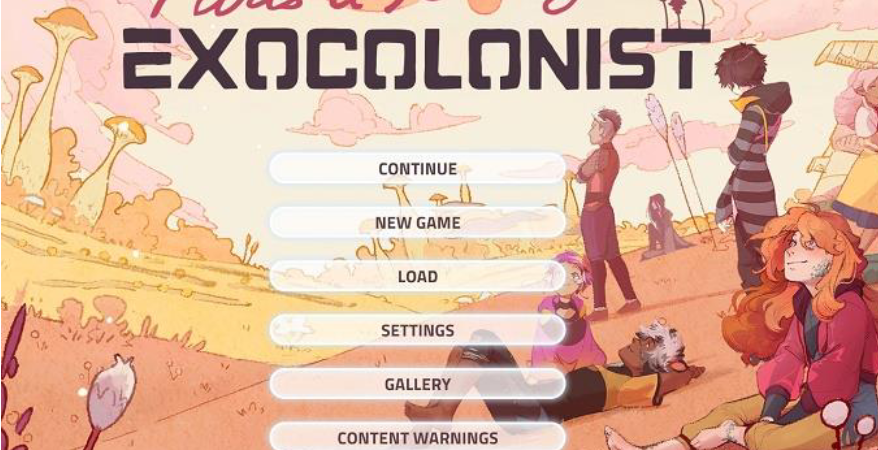
In the menu of the game exists a tab clearly labeled “content warnings”, declaring the game suitable for ages 13 and up despite mature themes. However, under this broad warning exists separate tabs for broad subject matter – character death, children at risk, animal cruelty, domestic abuse, etc. – that can be selected. If a player chooses to click on a tab, they will gain more specific information on the subject, letting players know the gist of the storyline with those themes, if they can be prevented or ended early, and how to avoid those storylines entirely if it’s possible. Specific information provided can allow a player to tell if the material will be out of their comfort zone and if the game is playable to them at all – rather than just using a general warning and hoping a player figures out the rest.
This is why I was a Teenage Exocolonist’s warning system works so well – if none of the broad warnings apply to you, you can ignore them. If one of them makes you worried, you can click on the tab to gain more information, and either choose not to play or avoid optional storylines as you continue with the main story. You don’t risk missing out on a game because of a specific scene – nor do you risk just stumbling across a single optional plotline that wasn’t properly warned of. The game strikes the perfect balance so everybody can be comfortable and enjoy.
It’d probably be beneficial if other games adopted a similar strategy to I was a Teenage Exocolonist. However, since it’s hard to say whether this will occur, it might be better to just play I was a Teenage Exocolonist. I’d wholeheartedly recommend it – and I suggest you go buy it on Steam as soon as you can. Your friends may not see you for the rest of the week as you romance Dys for the 100th time but honestly? Having a magical experience with such a well-constructed, well thought out game is worth it.
Works Cited:
Laura Jane Bower, “The Woman in Black: A Defense of Trigger Warnings in Creating Inclusive Academic Spaces for Trauma-Affected Students through a Feminist Disability Studies Pedagogy”, Journal of Criminal Justice Education, October, 1-18. https://doi.org/10.1080/10511253.2023.2264370

 The Vault Publication