
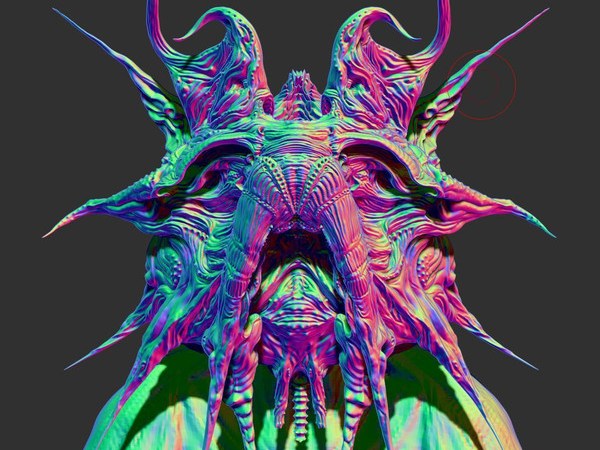
Originally hailing from Kepler22B but inhabiting a juvenile Homo sapiens body since 11/11/1981, qebrµs was a highly adept digital trackmaker inhabiting what was then known as Caen, in the country of France. Its guardians bestowed the pseudonym Thomas Denis, appearing similar to surrounding humans. Following early life and somatic maturation, qebrµs resided in an underground laboratory in the state of Micronesia in which it studied plant samples from Earth, while creating new sounds in its free time. (NOTE: Many companions state that it continued to reside in France, but they do not know the mechanisms of fourth-spatial-dimensional travel.) The few humans who exposed their auditory nerves to its purely synthesized waveforms were awakened to a complete inversion in what they understood as music. Some would classify it under a sub-genre they named “intelligent dance music”, or IDM. Other practitioners of IDM who may be more known to the human populace include Aphex Twin, The Flashbulb, and Mr. Bill. (NOTE: They too were not originally from Earth.)
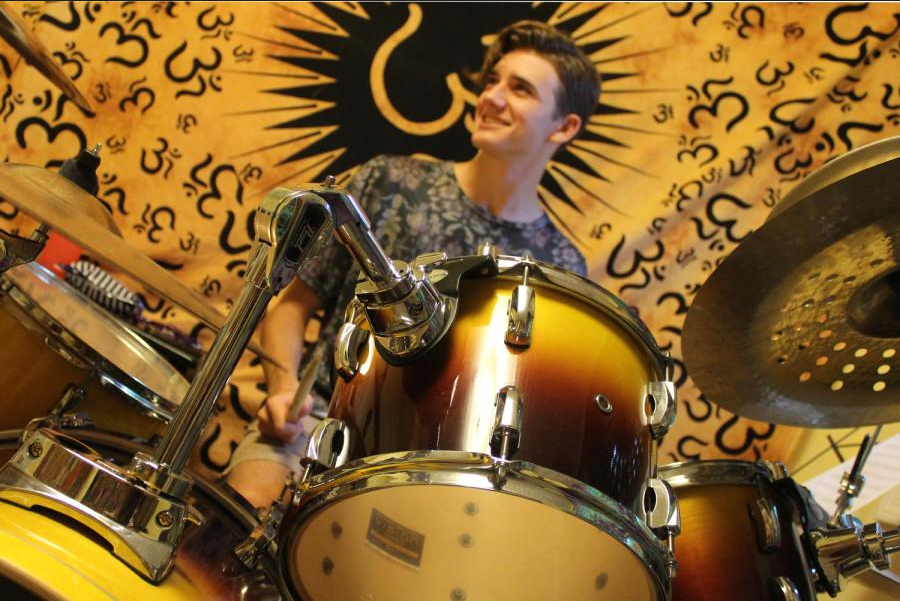
Earthian music, for the most part, only seemed to utilize a small percentage of the possible frequencies and stereographic space within the audible range of the Sapienic auditory receiver. Along with that, it tends to think rhythmically only in twos and threes, and multiples thereof, at a constant and unchanging rate. While exceptions exist, Homo sapiens at large did not widely accept anything divergent from this paradigm. qebrµs disagreed and sought to consistently formulate dissimilar soundscapes, though it may have appeared as a human in its inhabited corpus. Despite the pure depth, length, breadth, and ankatath of the sound waves, none were made from Sapienic instruments of music; all were synthesized through a silicon-transistor based computer, running human-made software Cubase SX3 (released by corporate group Steinberg Media Technologies GmbH).
Over the course of its laboratory time, qebrµs has released various collections of its creations to the public in the form of various “albums” as well as shorter “EPs” and single tracks. Some bear names using the Sapienic Roman-Latin script, such as EXOPHOBIA, while others use depictions of Keplerian language using the most reflective symbols available in the Unicode base for electronic computers. While crude, these depictions attempt to symbolize life and messaging from Kepler22b, such as – ⊶⊑∷⌊∴⊹∵⌉∷⊒⊷ or ᐔ ᐌ ᐂ ᐍ ᐚ.
For a further sampling, some preserved hyperlinks accompanied by descriptions and commentary follow:
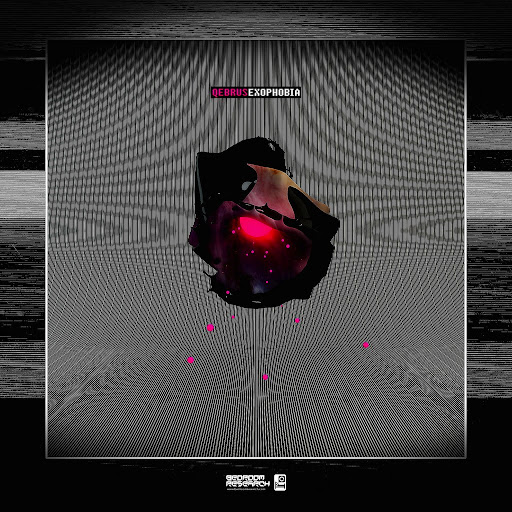
Vlcnmtr, from the album EXOPHOBIA (2012), may invoke an image of a refuse receptacle made of sheet metal, being thrown into free motion down a flight of stairs. While the author is inclined to agree with that assessment, they also believe that this track shows the ability to create large auditory impacts without purely following a constant tempo. Following the metallic and twisting opening section, the listener is barraged with synthesized booms making use of various frequencies, which seem to slow down and speed up at will, eventually arriving at a constant tempo. In some human circles, this arrangement has gained some notoriety and has been used by other IDM artists in their own performances.
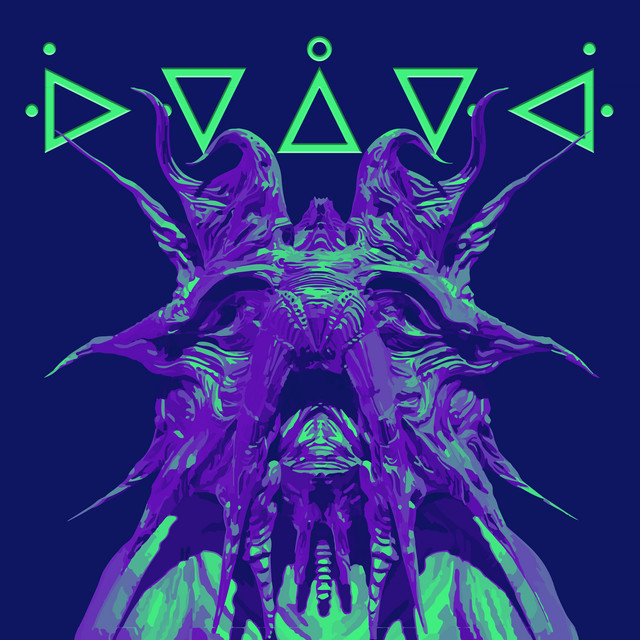
⊶⊚⊖⬚⊟⊑∷༜⊚༜∷⊒⊞⬚⊖⊚⊷, from the EP ᐔ ᐌ ᐂ ᐍ ᐚ (2017), is a glimpse into the higher tempo works of qebrµs. A driving low-frequency distorted bassline permeates this piece with interspersed high-pitch sweeps, shatters, and swipes. Stereo mixing is used symmetrically, covering the entire axis of sound, creating a sense of engulfment in amorphity. Some may describe it as a deep delve into uncharted territory, a bold exploration of a chaotic and threatening darkness. qebrµs may believe that it simply represents the typical soundscape of its home planet.
Qebrus – ◙◙◙◙◙◙◙◙◙◙◙◙◙◙◙◙◙◙◙◙◙◙◙◙◙◙◙◙◙◙◙◙◙◙◙◙◙◙◙◙◙◙◙◙◙◙◙◙◙◙◙◙◙◙◙◙◙◙◙◙◙◙◙◙◙◙◙◙◙◙ [full album]
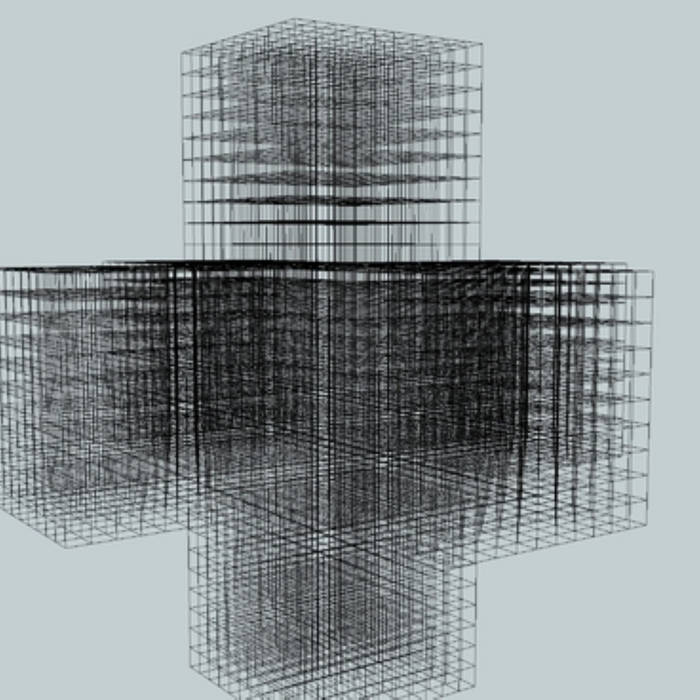
Track 6, ◙◙◙◙◙◙, of qebrµs’ final album, ◙◙◙◙◙◙◙◙◙◙◙◙◙◙◙◙◙◙◙◙◙◙◙◙◙◙◙◙◙◙◙◙◙◙◙◙◙◙◙◙◙◙◙◙◙◙◙◙◙◙◙◙◙◙◙◙◙◙◙◙◙◙◙◙◙◙◙◙◙◙, is a strangely melodic entry making use of many resonant bell-like sounds that are reminiscent of instrumental percussion music, as well as eerie string ensemble-like background harmonies. Of its many works, this one feels eerily human, with the use of many non-synthesized samples and even the occasional interjecting sampled yell. However, it remains unsettling and alien, as if the song’s humanity was gradually losing control over the melody, the beat, the instrumentation, until it is no longer recognizable. U◙til ◙t is no◙◙ing bu◙ ◙ark bl◙◙s, ◙◙◙oid ◙f ◙◙l m◙◙◙◙◙◙…
In the times when qebrµs decided to appear to audiences, these soundscapes were often accompanied by visual renderings that matched their surrealism and complexity. The author does not have any primary data to back up their claims, however they speculate that these performances were key in shaping the community of humans that would gather to celebrate IDM culture. It appears that qebrµs was not averse to conversing with these individuals, as many claim that qebrµs was pleasant to them and often gave bits of its auditory knowledge to members of the community.
No organism, Keplerian or Sapienic or from any other place across the cosmos, understands the machinations within qebrµs’ processing centre during its creative time. By any standard, it was a savant of sound. qebrµs unexpectedly left Earth in 02/2018, leaving behind its Homo sapiens body. While it continues its search for all biological samples across the Observable Universe, its time on Earth is remembered fondly by those who have listened to its creations.
So far, Internet data archives generally reveal little about qebrµs, with coverage only seen in discographic websites or some unpopular musical publications. While qebrµs did maintain a webpage during its time on Earth, it has since ceased to exist. This was a brief report based on what could be found outside the more hidden communities that may have surrounded qebrµs and its music. The author is always enthusiastic to receive any more information about such an interesting lifeform.

 The Vault Publication